Sinless Flesh: A Critique of Karl Barth’s Fallen Christ
Did Christ assume a fallen human nature?
“What is not assumed is not healed.” So goes the Chalcedonian maxim articulated by Gregory of Nazianzus regarding the nature and extent of Christ’s work in assuming a human nature. But what is the nature of that assumption? If Christ is to stand in solidarity with us, must he have assumed not merely a human nature, but specifically a fallen human nature?
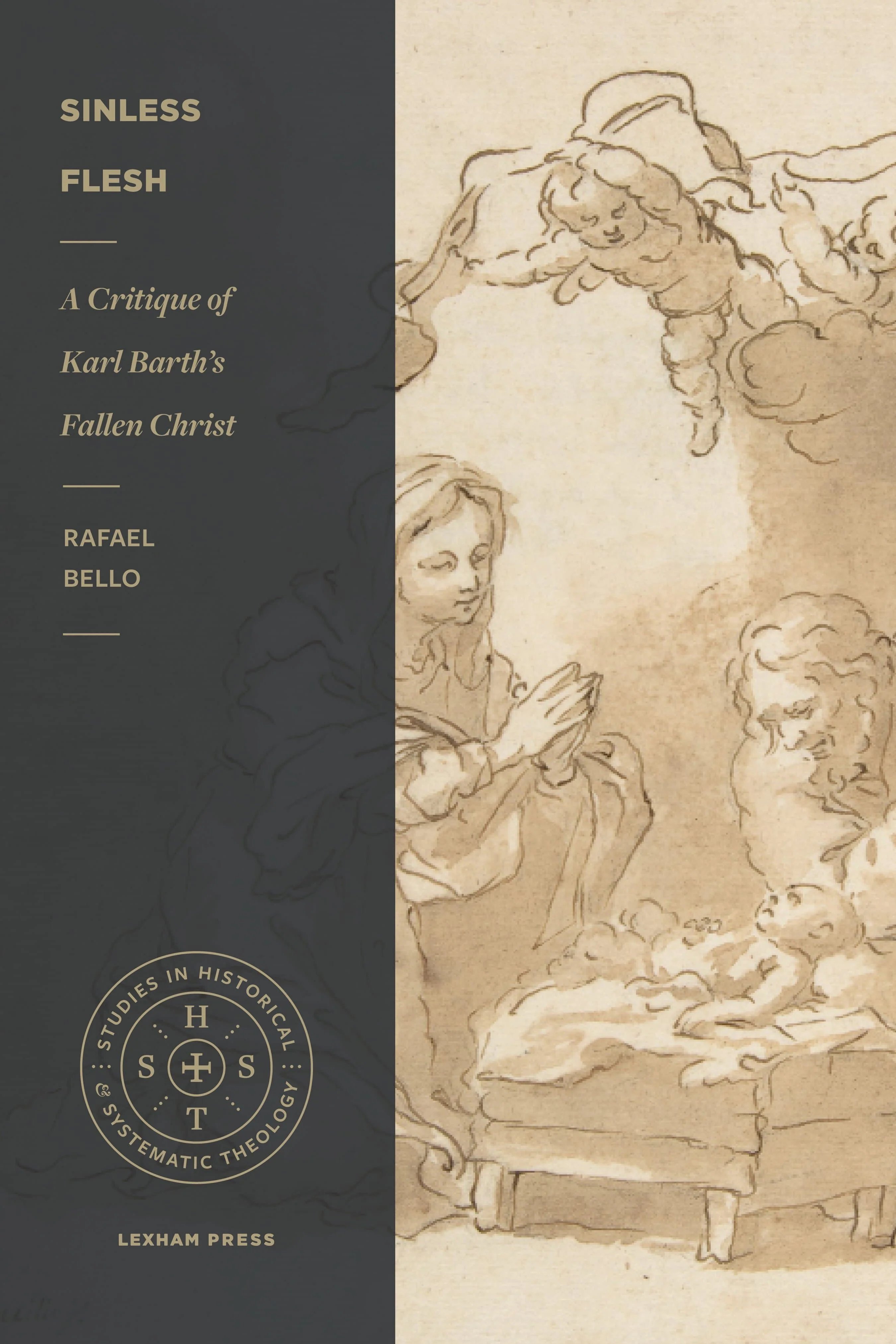
In Sinless Flesh: A Critique of Karl Barth’s Fallen Christ, Rafael Nogueira Bello argues against the assertion made by Karl Barth, T. F. Torrance, and those who follow them that Christ assumed a fallen nature. Through retrieval of patristic, medieval, and Reformed orthodox theologians, Bello argues that a proper understanding of human nature, trinitarian inseparable operations, and the habitual grace-grace of union distinction leads to the conclusion that the assertion that Christ assumed a fallen human nature is at odds with faithful theological and historical understandings of the incarnation.
152 pages.
Product Information
Product Information
Shipping & Returns
Shipping & Returns
Description
Did Christ assume a fallen human nature?
“What is not assumed is not healed.” So goes the Chalcedonian maxim articulated by Gregory of Nazianzus regarding the nature and extent of Christ’s work in assuming a human nature. But what is the nature of that assumption? If Christ is to stand in solidarity with us, must he have assumed not merely a human nature, but specifically a fallen human nature?
In Sinless Flesh: A Critique of Karl Barth’s Fallen Christ, Rafael Nogueira Bello argues against the assertion made by Karl Barth, T. F. Torrance, and those who follow them that Christ assumed a fallen nature. Through retrieval of patristic, medieval, and Reformed orthodox theologians, Bello argues that a proper understanding of human nature, trinitarian inseparable operations, and the habitual grace-grace of union distinction leads to the conclusion that the assertion that Christ assumed a fallen human nature is at odds with faithful theological and historical understandings of the incarnation.
152 pages.